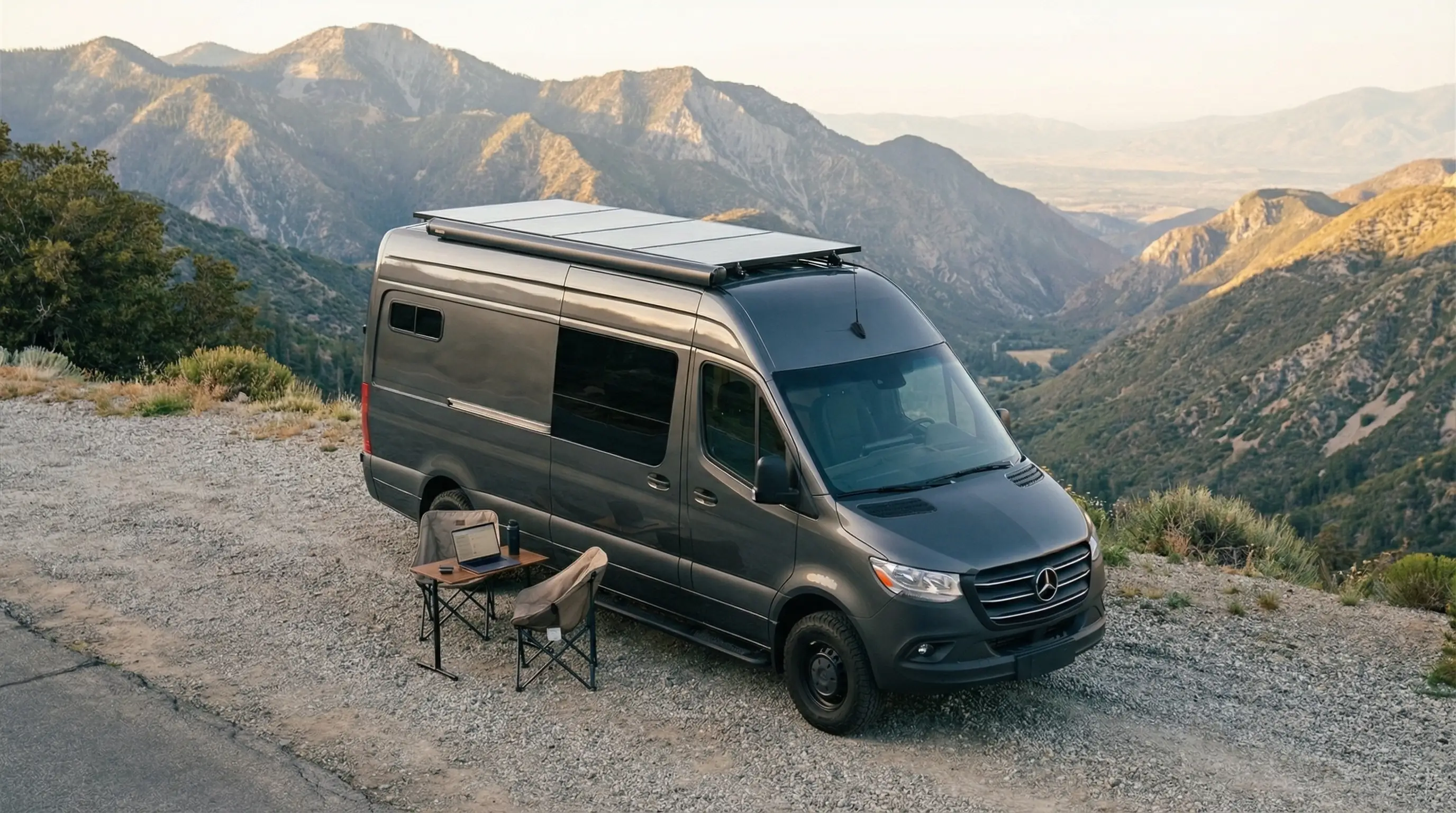
The Sprinter 170" extended — 2019 high-roof, purchased with 48,000 miles.
Why a Sprinter
Sarah is a UX designer and James is a software engineer. Both fully remote, both used to multiple monitors and a proper sitting/standing workspace. After 9 months of trying to work from their Transit (which they'd owned before this build), they sold it and upgraded specifically for the workspace. A 170" Sprinter with the extended body gave them room for a real desk setup without sacrificing the bed.

The workspace: motorized standing desk, dual monitor arms, cable-managed power strip, fiber wifi router on a Starlink connection.
The Layout
The 170" extended Sprinter gave them 148" of interior floor space behind the driver partition. The layout from front to back: (1) driver cab with folding passenger seat for occasional passenger use, (2) standing desk workspace taking up the first 48" of the cargo area, (3) kitchen galley along the driver's side for 36", (4) wet bath in its own separate compartment with a real door, (5) queen bed in the rear filling the full width.
The desk is a custom motorized frame (FlexiSpot E7) with a butcher block top cut to 54" wide × 24" deep. At sitting height it's 27", at standing it raises to 47" — enough clearance for working standing in a high-roof Sprinter without hunching.
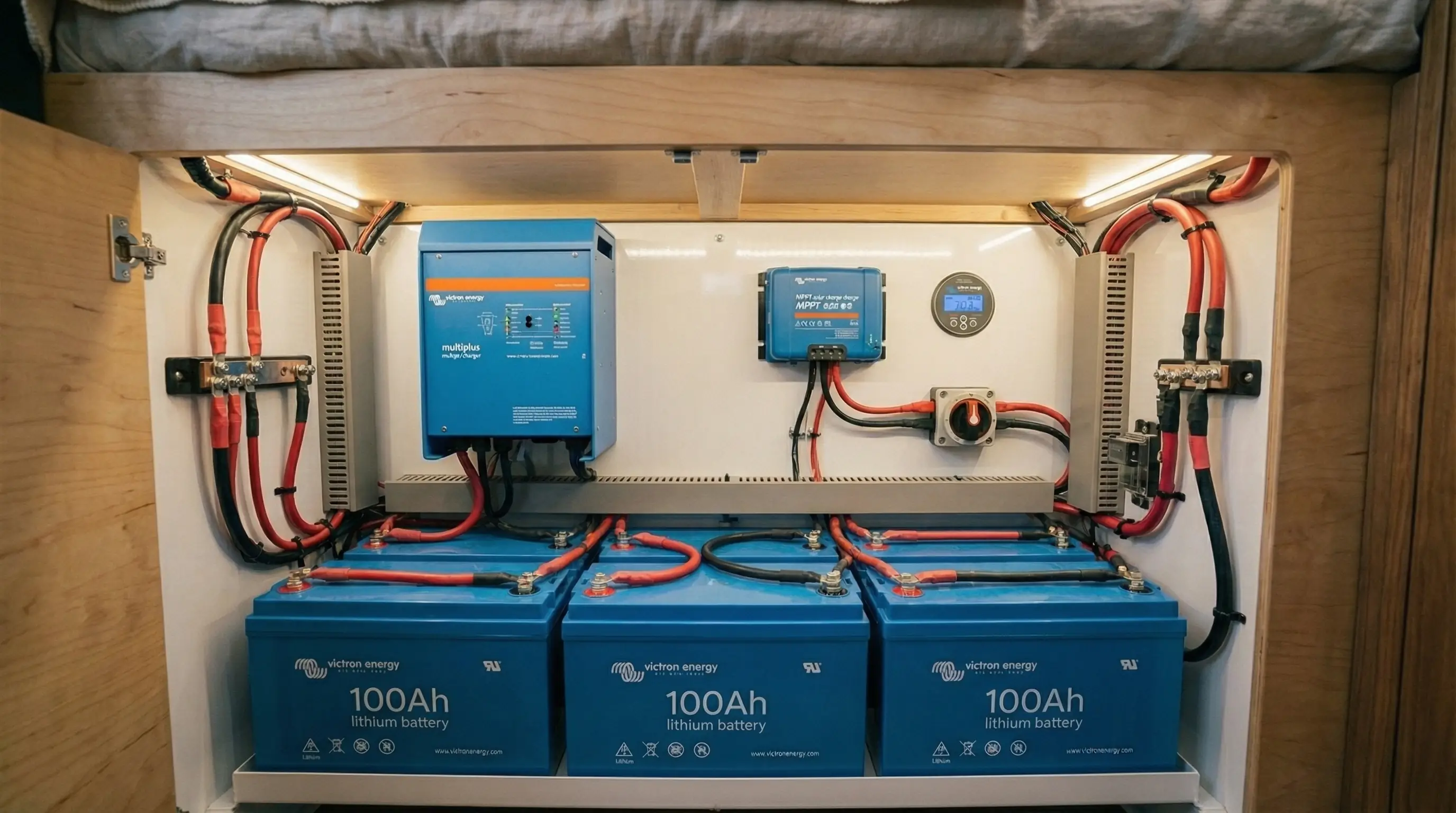
The electrical bay under the bed: three 100Ah Battle Born batteries, Victron Multiplus, SmartSolar, and BMV-712.
The Electrical System
This is the most-asked-about part of their build, and it's the most thoroughly documented. Their daily power budget: two laptop chargers (180W combined), two external monitors (80W combined), fridge (130Wh/day), lights (30Wh/day), fan (40Wh/day), Starlink (75Wh/day), miscellaneous phone/camera charging (50Wh/day). Total: approximately 585Wh/day.
With 600W of solar in a sunny climate they generate 1,800–2,400Wh on a good day. On overcast days in the Pacific Northwest (where they spent 3 months), they were generating 300–600Wh/day — fine with 300Ah of lithium as a buffer, but they learned to run the engine alternator for 45 minutes after two consecutive cloudy days.
| Component | Spec | Cost |
|---|---|---|
| Solar panels | Renogy 200W × 3 = 600W total | $474 |
| Charge controller | Victron SmartSolar MPPT 100/50 | $248 |
| Battery bank | Battle Born 100Ah × 3 = 300Ah | $2,700 |
| Inverter/charger | Victron Multiplus 12/2000/80 | $680 |
| Battery monitor | Victron BMV-712 | $108 |
| DC-DC charger | Victron Orion-Tr 30A | $168 |
| Fuse block + bus bars | Blue Sea Systems | $124 |
| Wire, lugs, conduit | All AWG-correct runs | $178 |
| Electrical Total | $4,680 | |
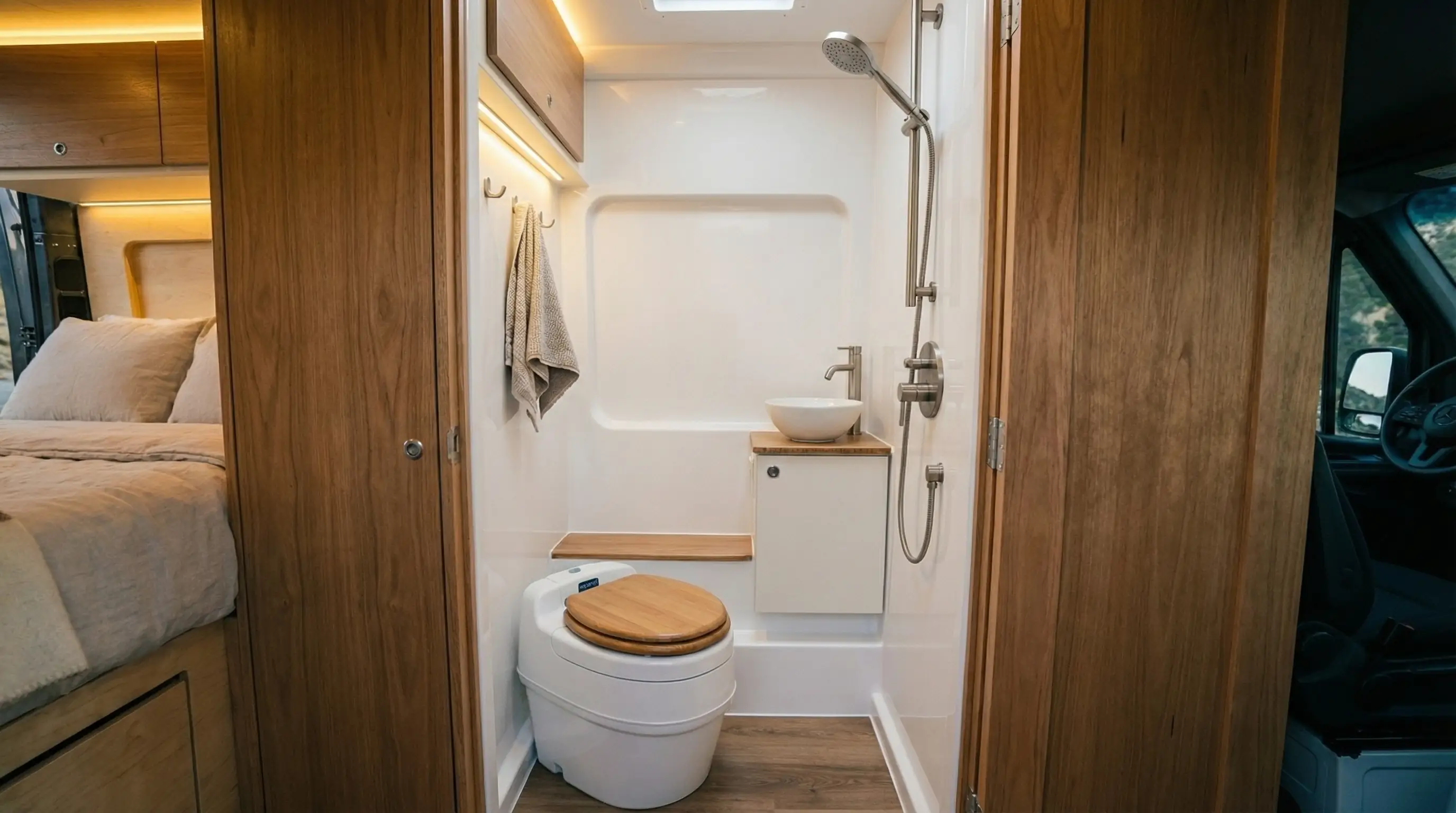
The wet bath: fiberglass walls, real showerhead, Separett composting toilet, full door with lock.
The Wet Bath
Building a proper wet bath in a Sprinter takes 42–48" of length depending on how you handle the toilet placement. Sarah and James gave it 44" — tight, but fully functional. Fiberglass shower walls (cut from a camper replacement panel kit) make cleanup easy. The shower drain goes to a gray water tank under the van. Hot water from an Eccotemp L5 tankless propane heater mounted just outside the wet bath wall.
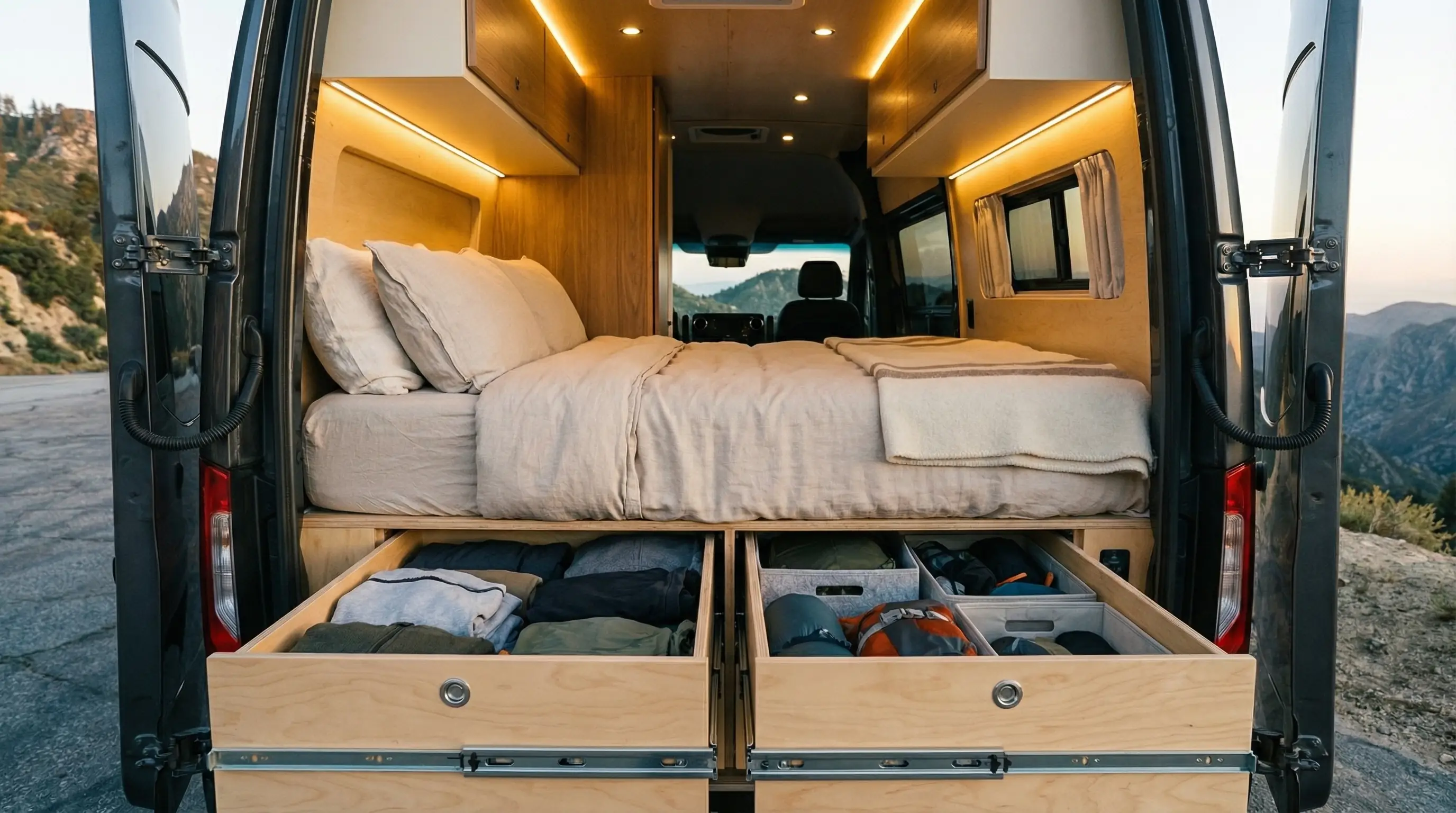
The queen bed fills the full rear width with 4" of custom foam. Storage drawers below on full-extension slides.
Full Cost Breakdown
| Category | Cost |
|---|---|
| Van purchase (2019 Sprinter 170", 48k miles) | $38,500 |
| Insulation (spray foam + polyiso + Thinsulate) | $680 |
| Subfloor + flooring (vinyl plank) | $380 |
| Wall paneling (birch ply + paint) | $240 |
| Electrical system (full itemized above) | $4,680 |
| Standing desk (FlexiSpot E7 + butcher block) | $420 |
| Kitchen (stove, sink, pump, tank, fridge) | $980 |
| Wet bath (shower, toilet, drain, propane heater) | $1,240 |
| Bed platform + custom foam mattress | $480 |
| Starlink (dish + first month) | $599 |
| Diesel heater (Webasto Air Top 2000 STC) | $1,200 |
| Roof fan (Maxxair 4500K) | $140 |
| Misc hardware, lighting, curtains | $361 |
| Total Build Cost | $11,400 |
Van purchase price not included in build total above.
6 Months Later — Honest Assessment
Sarah and James have been full-time in the van for 6 months as of this writing. The workspace is exactly what they needed — James works 8-hour days with no complaints about ergonomics, Sarah runs design sessions with her 27" external monitor without issue. The electrical system has never failed them. The wet bath is the thing they use most to justify the added complexity — "a real shower changes everything about how long you can comfortably stay off-grid," Sarah says.
One thing they'd change: they'd add a second roof fan at the rear for better airflow over the bed in summer. The single fan in the workspace area doesn't reach the sleeping area well on hot nights.
Join the Community →