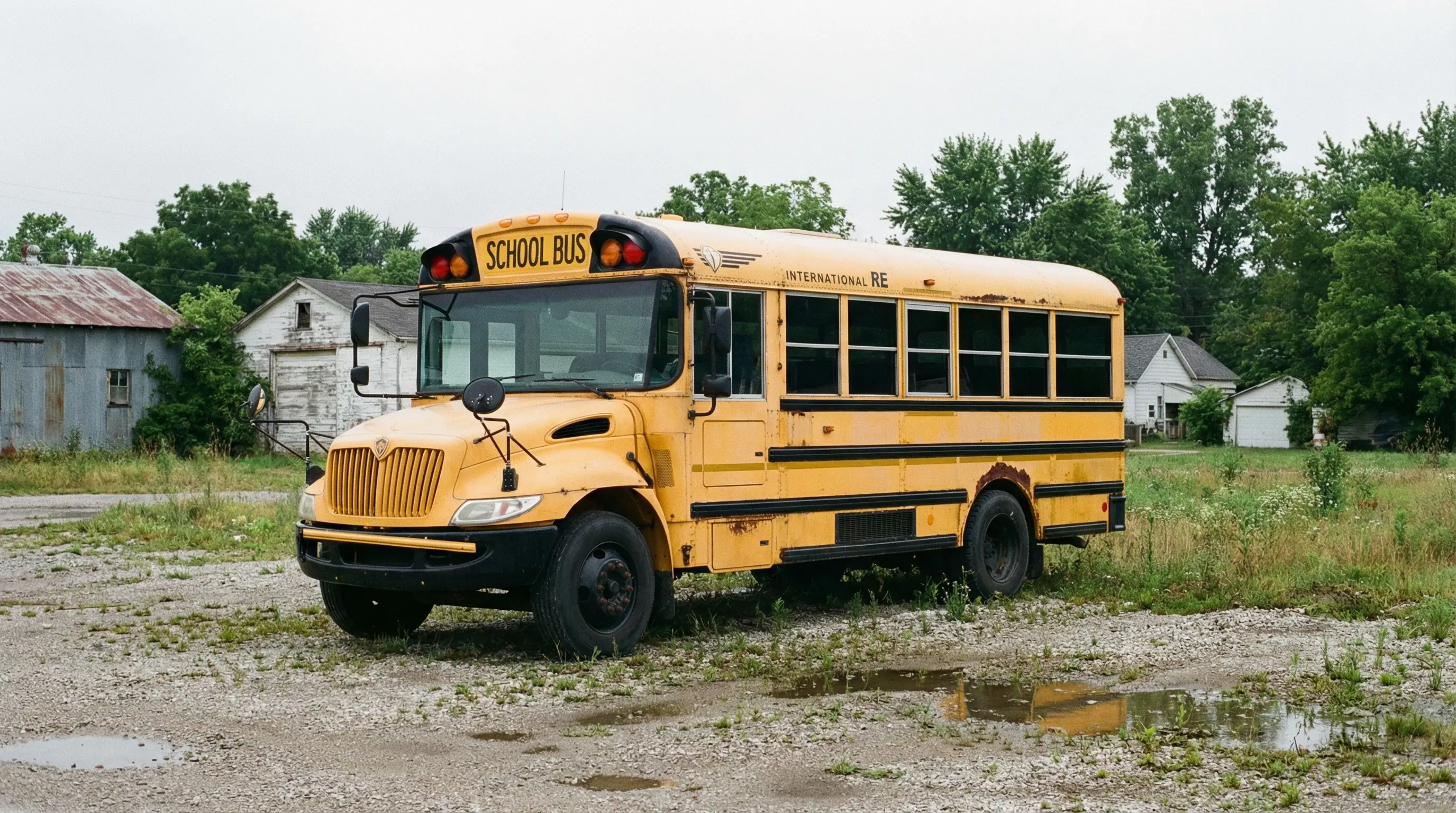
The bus before: a 2004 International RE short bus, 26 feet total length, purchased from a special needs transport company in Ohio for $5,400.
Why a Short Bus
Jess spent two years watching full-size skoolie builds before deciding a 40-footer wasn't the right move for solo travel. Parking in cities is nearly impossible. Fuel economy is brutal. Campsite size restrictions exclude many national park and state park sites. And frankly, 280 square feet is too much space for one person — it's space to heat, insulate, and maintain.
A short bus — typically 20–26 feet, often called a "shorty" in the skoolie community — is a different proposition. You get standing headroom (unlike a van), real layout flexibility, and a dedicated bathroom space that's genuinely separate from where you sleep and cook. You give up some storage but gain an enormously more practical daily driver.
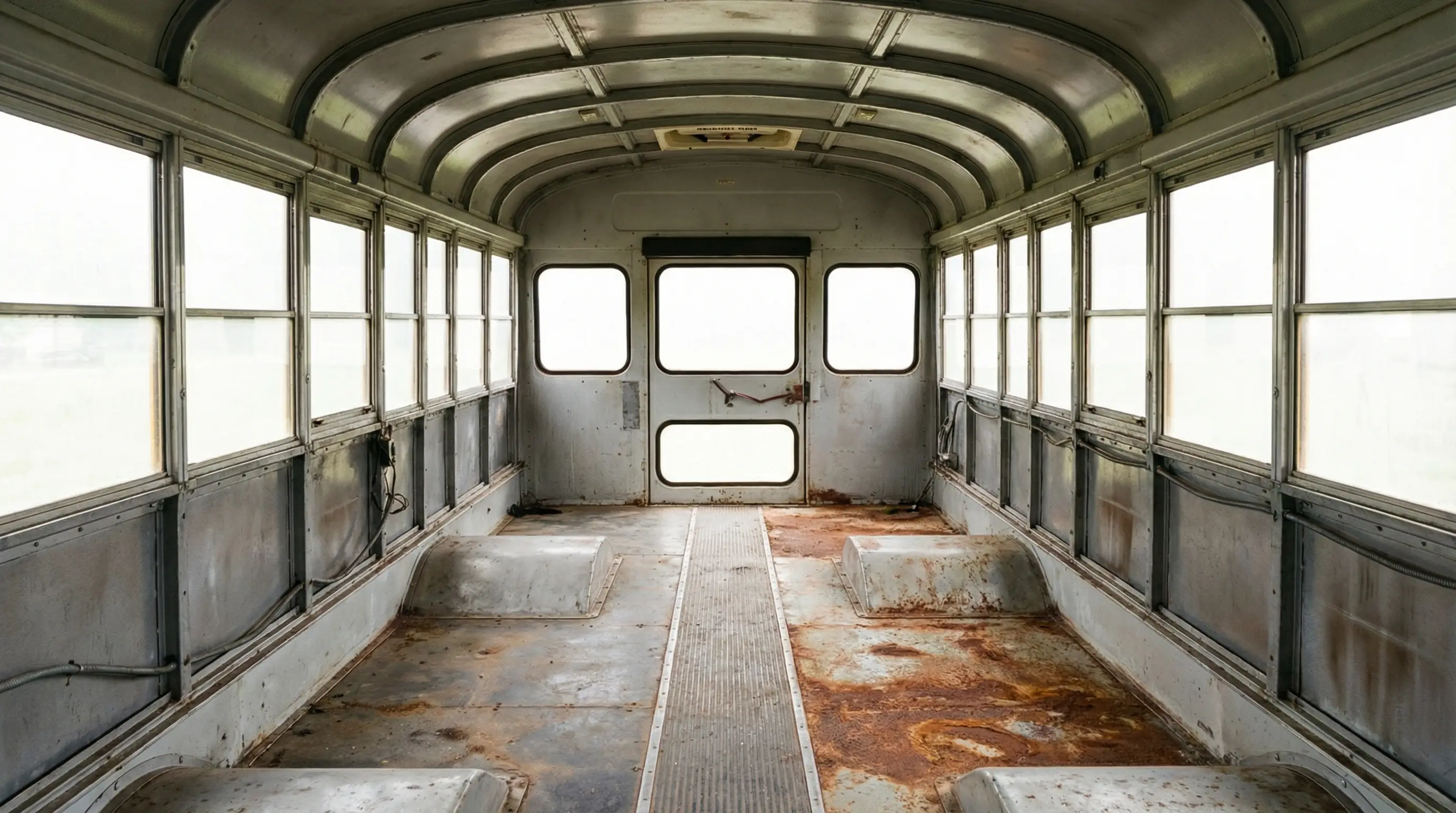
Demo complete: 24 seats removed, all interior trim stripped, floor rubber mat pulled. The floor was cleaner than expected — only surface rust in 3 spots, easily treated.
Short Bus vs Full-Size: The Real Trade-offs
✅ Short Bus Advantages
- Fits in standard parking spots (with overhang)
- Can enter most campgrounds and state parks
- Better fuel economy (Jess averages 14 MPG)
- Cheaper to register and insure in most states
- Easier to find a mechanic willing to work on it
- Quicker to build — less square footage to finish
❌ Short Bus Disadvantages
- Less storage than a full-size
- Can't fit a full kitchen + bathroom + bedroom without careful planning
- Fewer model options — harder to find good ones at auction
- Shorter wheelbase means bumpier ride on rough roads
- Resale value lower than well-converted full-size buses
The Layout (20 Feet of Interior)
Front to back: driver's compartment (retained as-is, with a curtain divider), then the living space at 240 inches of usable length. Jess spent 3 weekends on cardboard mockups before committing to any layout. Final arrangement:
- Living/dining (72") — L-shaped bench sofa that converts to a guest bed, fold-down dining table that mounts to the wall, bookshelf built into the wheel well on the driver's side.
- Kitchen (48") — full galley: 2-burner propane range, 12V 35L fridge, stainless sink with cold running water (no hot water plumbing — Jess uses an Eccotemp portable for occasional hot water outside), upper cabinets running the full length.
- Bathroom (36") — composting toilet (Nature's Head), corner shower (38"×38"), small sink mounted to the wall. Full door. More useful per square inch than any other room on the bus.
- Bedroom (84") — queen bed crosswise (fits perfectly in a short bus width), two-drawer nightstands built into the wheel wells, large windows on both sides for cross-ventilation, curtains for full blackout.
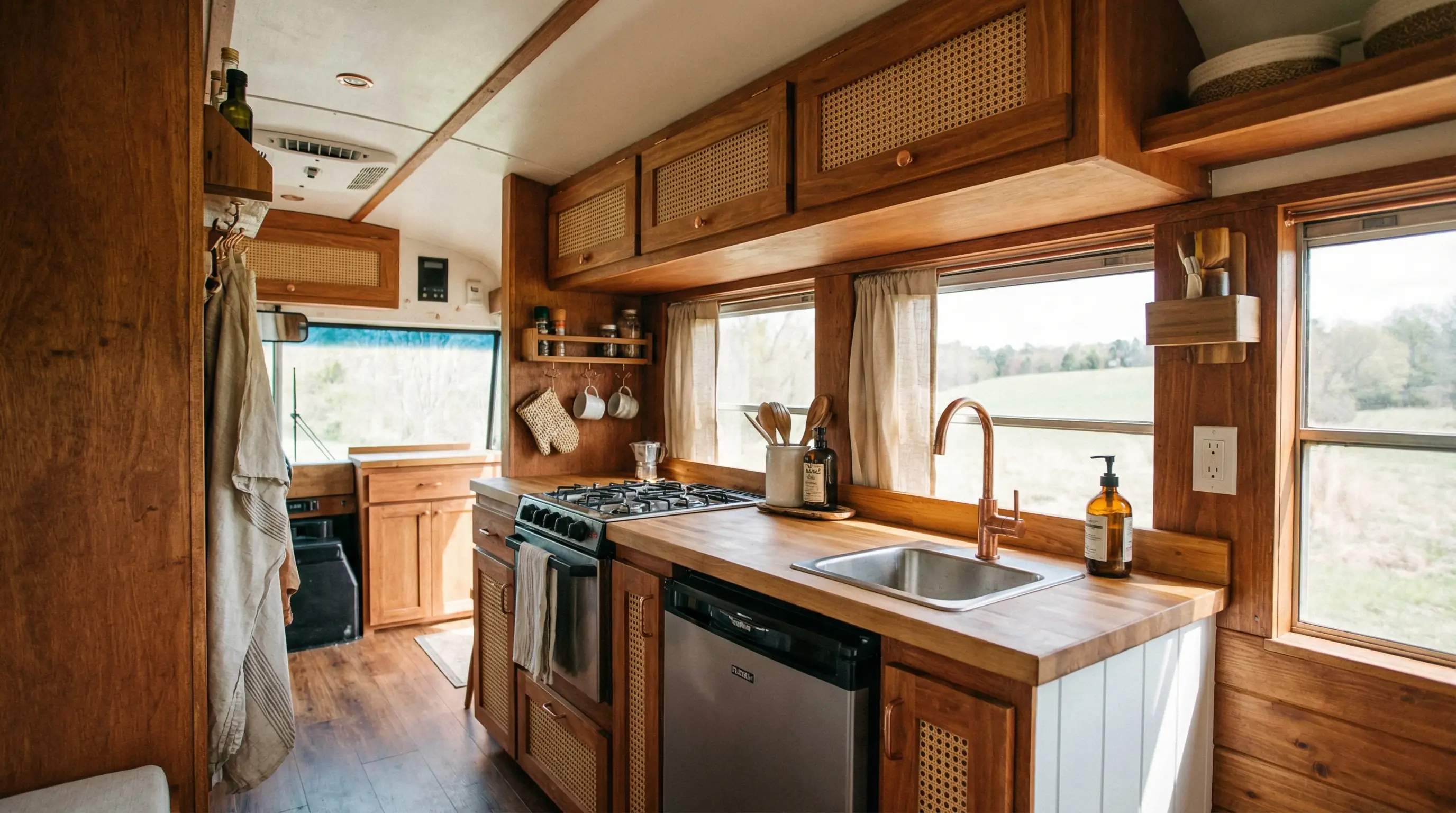
The kitchen: 2-burner propane, 35L compressor fridge, stainless sink — all in 48 inches. Butcher block countertop makes the whole space feel warm.
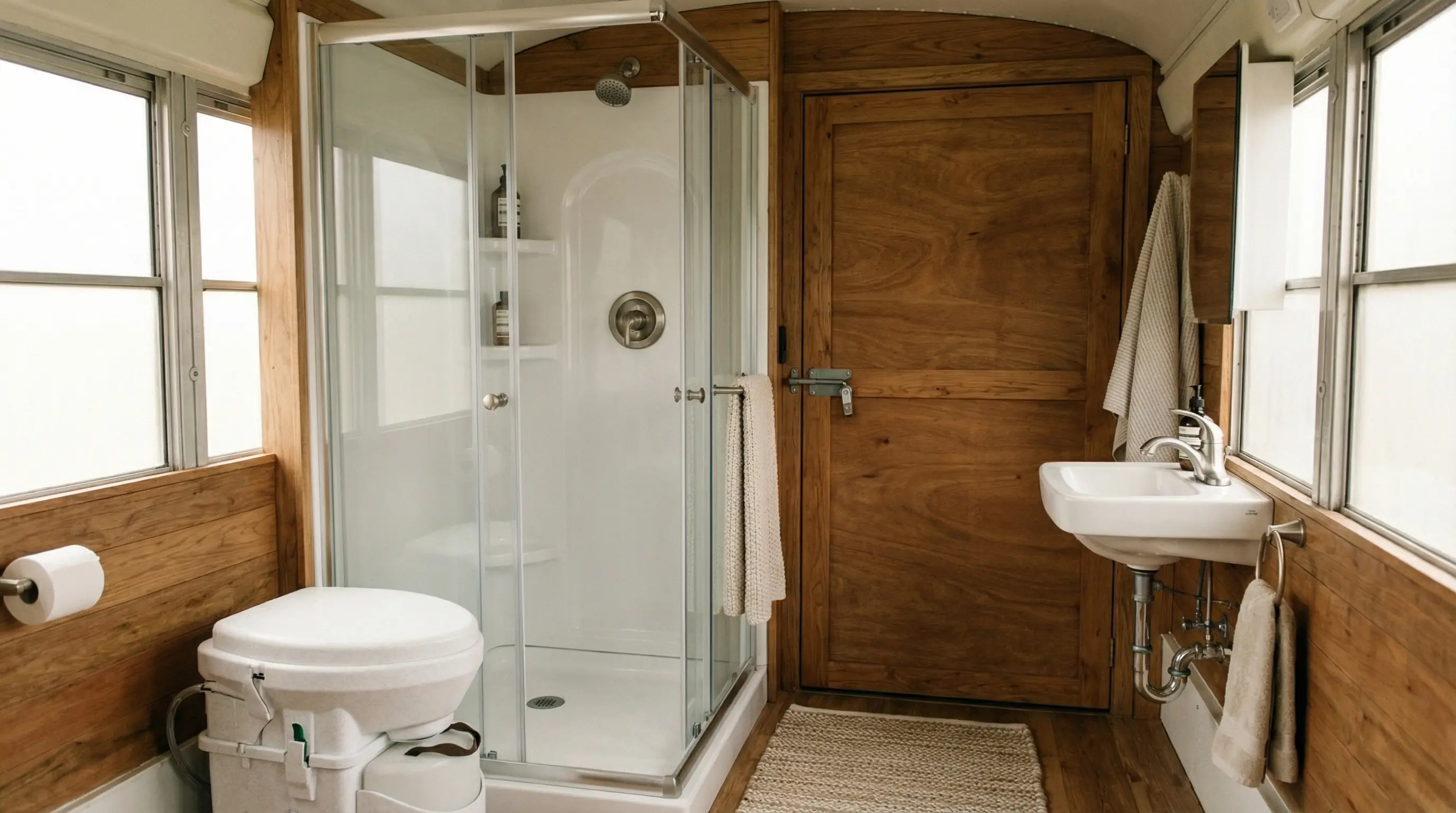
The bathroom: Nature's Head composting toilet, 38"×38" corner shower with fiberglass walls, wall-mounted sink. Full door with lock. 36 inches of floor space is surprisingly workable.
Electrical: 500W Solar + 200Ah LiFePO4
Jess's daily power use is modest by van standards — no work-from-bus setup, no multiple devices charging simultaneously. Budget: fridge (100Wh/day), lights (20Wh/day), fan (30Wh/day), laptop + phone (80Wh/day), shower water pump (10Wh/day). Total: ~240Wh/day. With 500W of solar in reasonable sun, this is trivially easy to maintain.
| Component | Spec | Cost |
|---|---|---|
| Solar panels | Renogy 200W × 2 + 100W flex = 500W | $478 |
| Charge controller | Victron SmartSolar MPPT 100/30 | $168 |
| Battery bank | Battle Born 100Ah × 2 = 200Ah LiFePO4 | $1,800 |
| Inverter | Renogy 700W pure sine | $118 |
| Battery monitor | Victron BMV-712 | $108 |
| Fuse block, wiring, misc | Blue Sea + correct AWG wire | $186 |
| Electrical Total | $2,858 | |
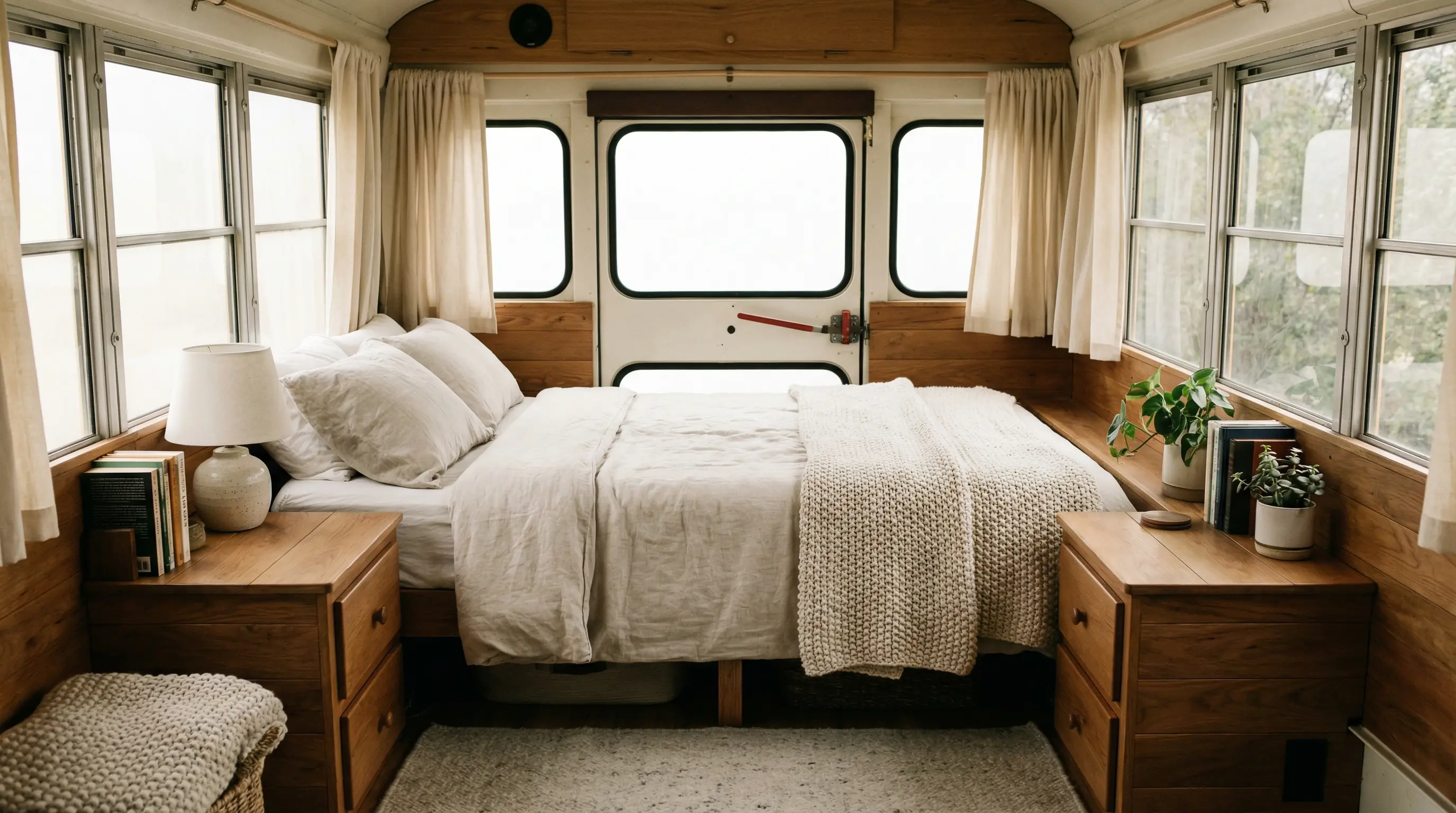
The bedroom: queen bed crosswise, nightstands built into both wheel wells, windows on both sides for cross-ventilation and natural light.
Full Cost Breakdown
| Category | Cost |
|---|---|
| Bus purchase (2004 International RE, Ohio) | $5,400 |
| Demo + disposal (seat hauling, dump fees) | $120 |
| Floor restoration (surface rust + POR-15) | $280 |
| Insulation (Thinsulate + polyiso + foam tape) | $480 |
| Subfloor + vinyl plank flooring | $320 |
| Wall + ceiling paneling (birch ply + cedar accent) | $440 |
| Electrical system (itemized above) | $2,858 |
| Kitchen (stove, fridge, sink, pump, cabinets) | $1,240 |
| Bathroom (toilet, shower, sink, plumbing) | $1,480 |
| Bedroom (bed platform, custom foam, curtains) | $580 |
| Living area (sofa conversion, dining table) | $480 |
| Diesel heater (Vevor + professional install) | $380 |
| Roof fan (Maxxair 4500K) | $140 |
| Tools (kept, used throughout build) | $620 |
| Misc: hardware, sealants, lighting, curtains | $382 |
| Total All-In Cost | $15,200 |
The $16,500 figure includes $1,300 in unplanned costs that came up during the build — mostly an unexpected engine service (injectors at 88k miles on the 7.3 PowerStroke) and one electrical redo after Jess wired the battery bank incorrectly the first time.
8 Months Full-Time: What Jess Says
"The short bus is the right answer for solo travel and I'd make the same decision again without hesitation. I've parked in cities, campgrounds, neighborhoods, and backcountry spots. I fit places a full-size never could. The bathroom makes a two-week off-grid stretch feel normal instead of adventurous-but-uncomfortable. The solar system is massively oversized for my actual needs — I never go below 80% state of charge."
The one regret: "I wish I'd added a second composting toilet vent to pull smell out of the bathroom faster. It works fine — Nature's Head is a great product — but in hot weather the venting could be better. A second vent fan on the opposite wall would fix it."
Join the Community →