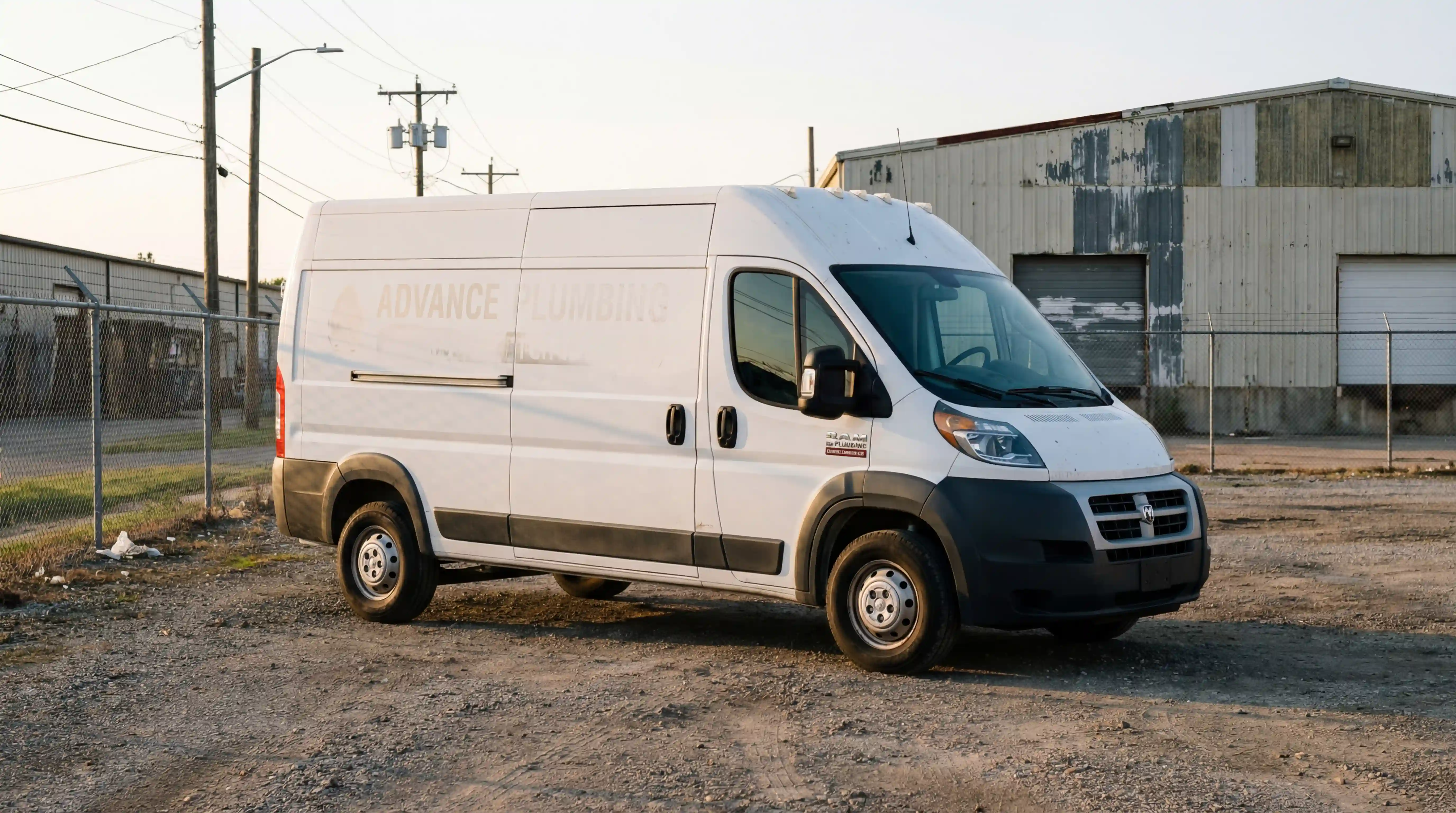
The ProMaster 136" on day one — $11,200, 78,000 miles, from a plumbing company fleet sale.
The Premise
Taylor had $4,000, a ProMaster, three free weekends before starting a remote job, and exactly zero construction experience. No power tools. No woodworking skills. The goal: a functional, livable van ready to move into before Monday morning of week four.
This isn't the prettiest build on vanlife. The walls aren't perfectly plumb. The bed frame is overbuilt because Taylor didn't trust their own measurements. But it's been lived in full-time for 11 months and nothing has fallen apart. Sometimes that's enough.
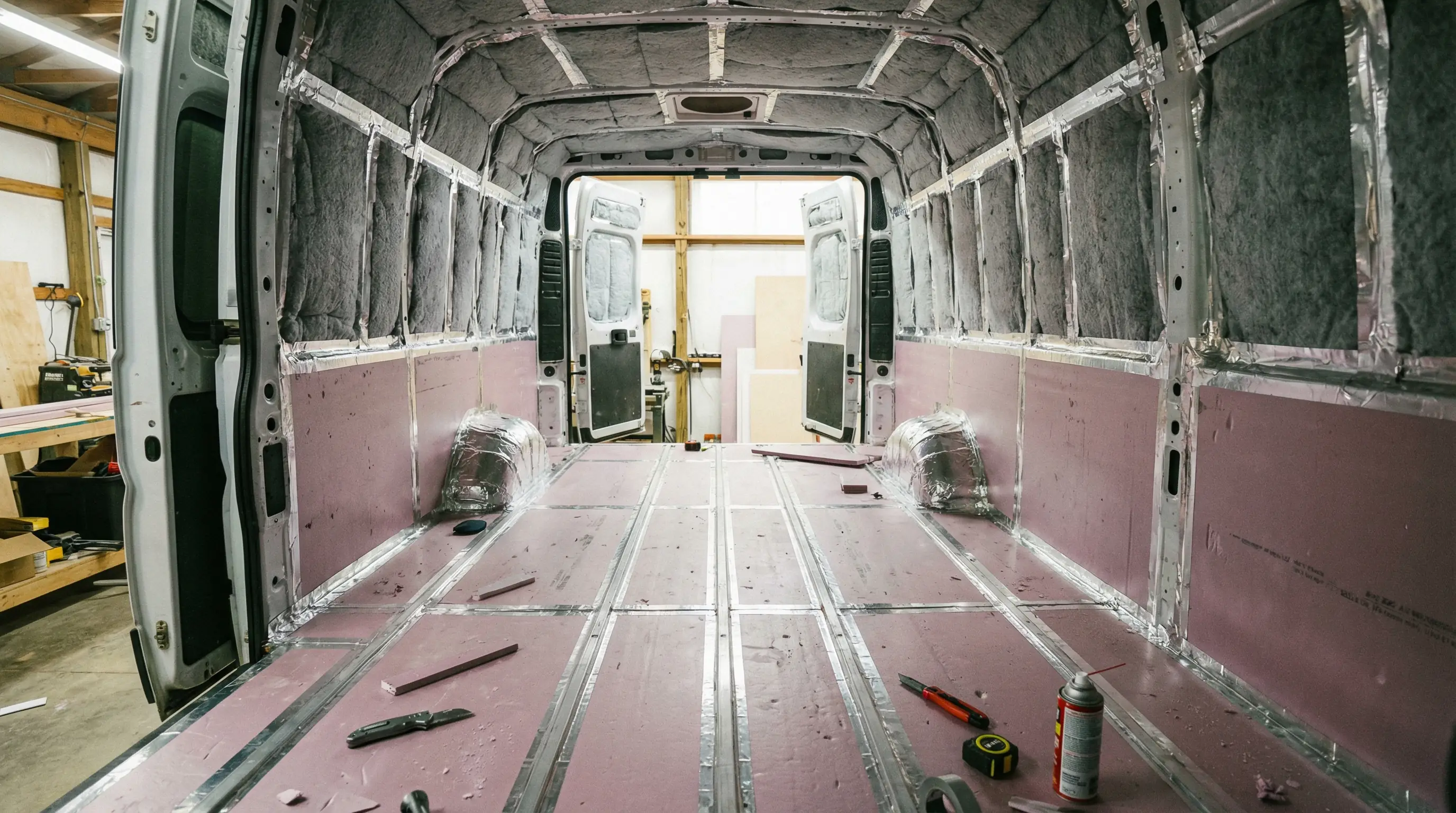
Weekend 1: XPS rigid foam in the floor and lower walls, Thinsulate in the ceiling and upper walls. No spray foam — too expensive and too tricky for a beginner solo build.
Weekend 1: Insulation
No spray foam. XPS rigid board for the flat sections (floor, lower walls, door panels), Thinsulate SM600L for the ceiling and upper curved walls where rigid board won't conform. 3M spray adhesive to hold the Thinsulate. Foil tape over every seam. Total insulation cost: $312.
Taylor used cardboard templates for every curved piece — cut the cardboard first, check the fit, then cut the real material. Took twice as long but wasted zero XPS.
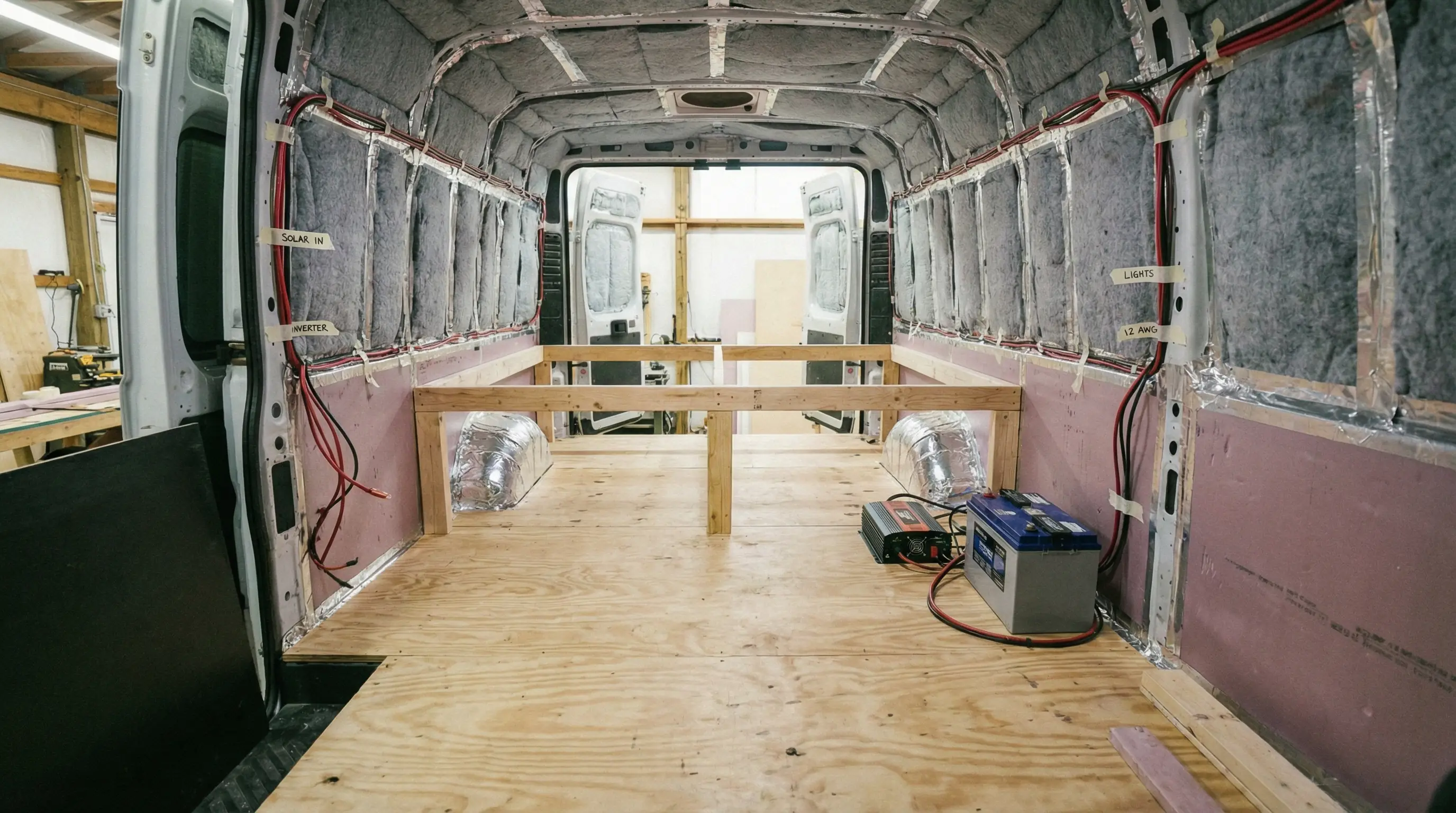
Weekend 2: plywood subfloor, bed frame rough-in, and all electrical rough-in before the walls go on. No walls first is a critical order-of-operations lesson.
Weekend 2: Structure + Electrical Rough-In
Plywood subfloor over 1" XPS foam. Bed frame from 2×4 lumber — simple, strong, cheap. All electrical wire runs done before any walls go up. Taylor ran 10 AWG to the fridge location, 12 AWG to two outlet locations, and 14 AWG for all lights. Every wire run was labeled with tape and a marker at both ends. This took half a day and saved enormous frustration later.
The entire electrical system is basic but correct: 200W panel, PWM controller (the one budget compromise Taylor made that they'd change — more on that below), 100Ah AGM battery, 400W inverter, properly fused at every positive terminal.
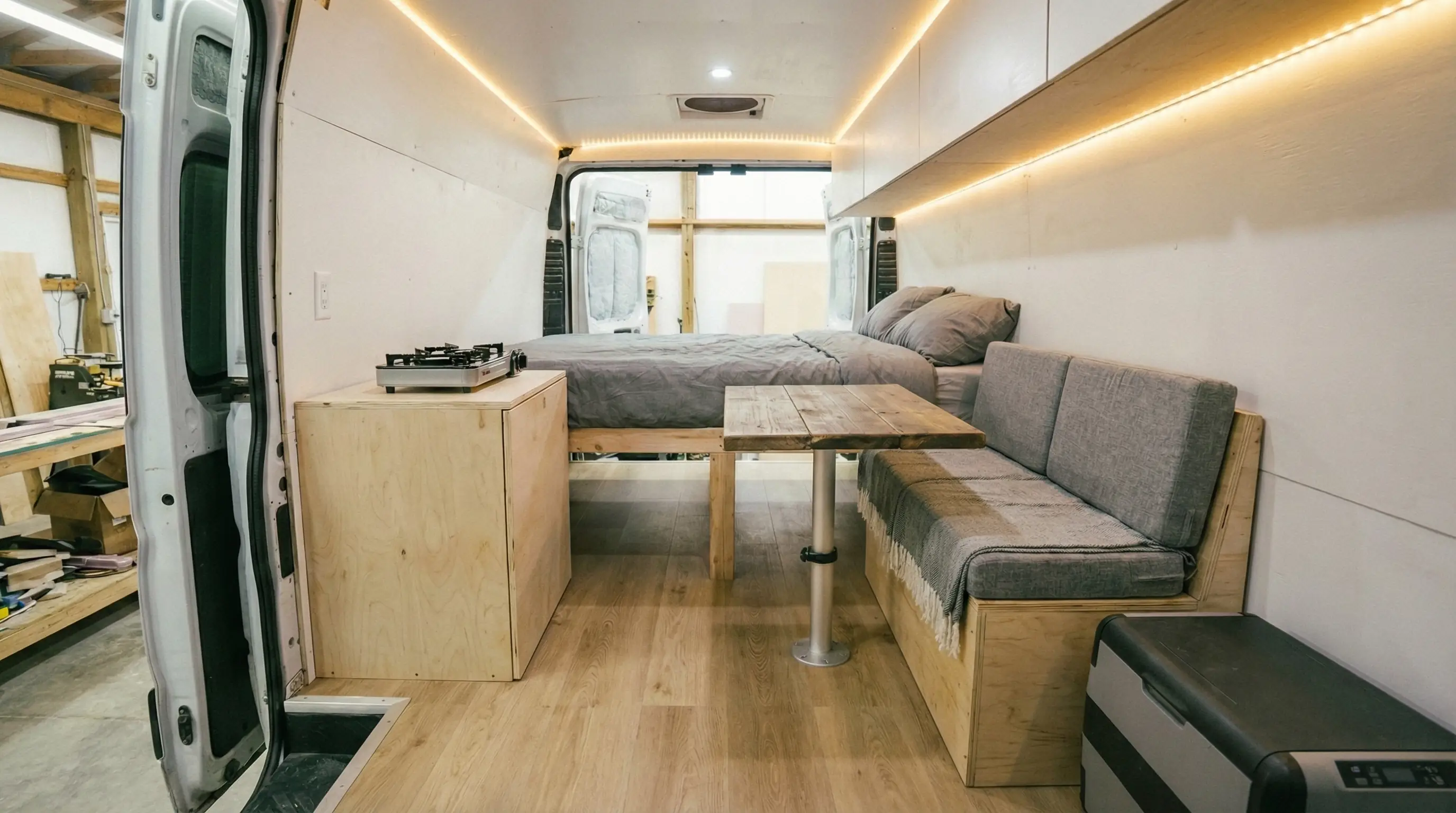
Weekend 3 complete: vinyl plank floor, bed with foam topper, kitchen box, fridge, and all electrical live. Not pretty — but everything works.
Weekend 3: Walls, Floor, Kitchen, Finish
Walls are bare painted plywood — no paneling, no shiplap. Two coats of white paint. Taylor tried one section of cedar paneling and decided it wasn't worth the extra time and cost for a first build. The van is bright and feels bigger than expected with white walls.
The "kitchen" is a single plywood box: 24" wide × 20" deep × 36" tall, with a 2-burner butane stove (not propane — no complex installation required) sitting on top. The compressor fridge sits next to it on the floor. No running water — a 3-gallon jug on the counter with a small hand pump suffices for now.
Full Cost Breakdown
Wait — how does $1,504 become $3,800? The van itself cost Taylor $11,200. The build cost was $1,504. The other $2,296 was tools purchased during the build (circular saw, drill, jigsaw, impact driver, assorted bits and blades) that Taylor kept. If you already have power tools, this build is under $1,600.
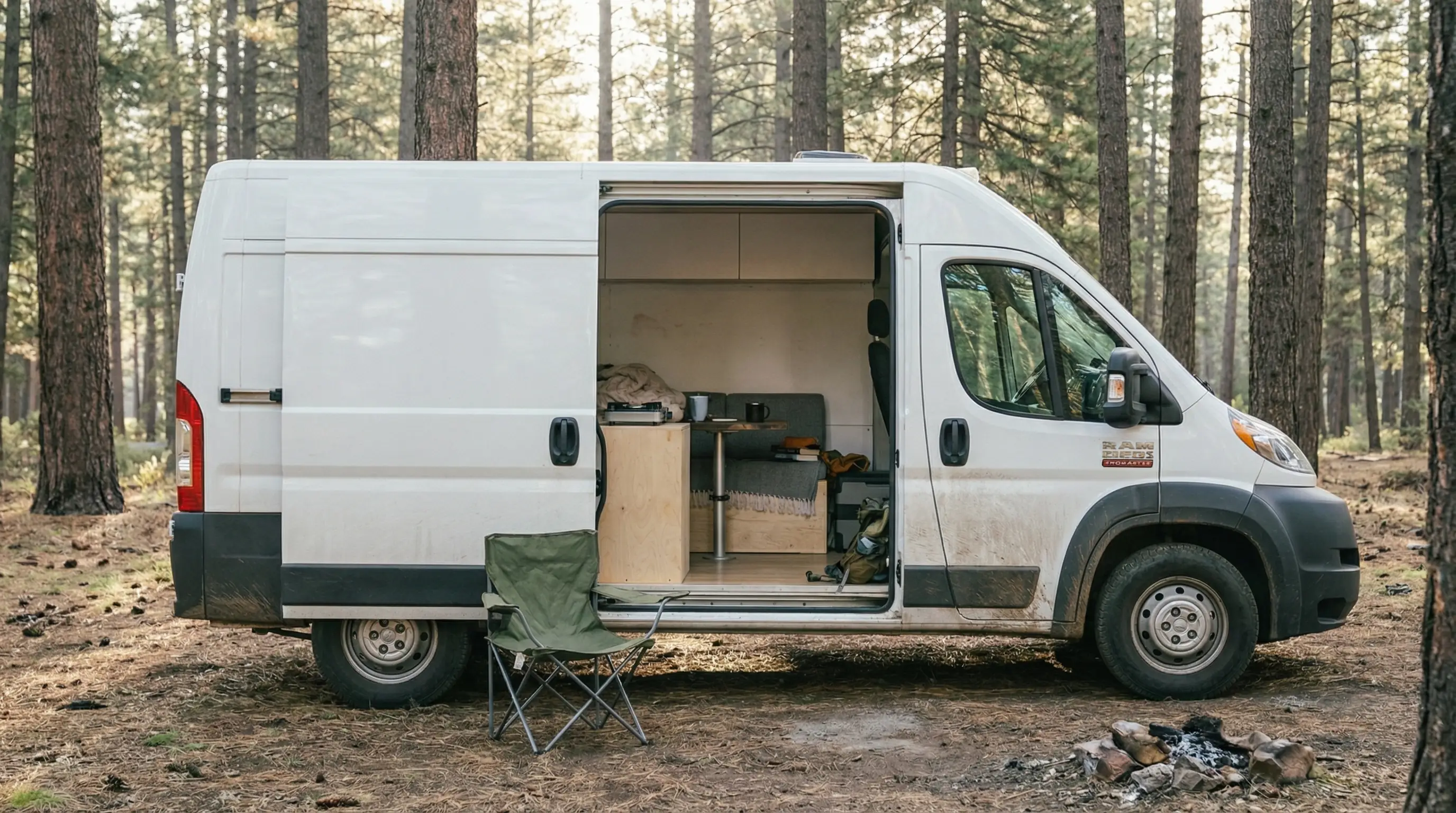
11 months later: nothing has broken, nothing has fallen apart. The van works. Sometimes that's the whole point.
11 Months Later: Honest Report
Taylor has been full-time for 11 months. The electrical system runs the fridge and phone/laptop charging without issue in sunny climates. In cloudy stretches (two weeks in Oregon in November), the AGM battery ran low and Taylor had to be careful. An MPPT and lithium upgrade is planned for the next van.
The no-plumbing setup has been fine — Taylor uses gym memberships for showers (Planet Fitness black card at $25/month, accessible nationwide) and the hand-pump water jug for washing dishes. "People make plumbing seem non-negotiable. It's not. It's a convenience, and you can add it later."
The biggest surprise: the butane stove. "I was prepared to upgrade to propane immediately. I haven't. Butane canisters are everywhere, cheap, and I go through one every 10 days or so. For a solo person who cooks simple food, it works perfectly."